Jimothy journal / Wildlife context
Why Does Jimothy Look the Way He Does?
Jimothy's shape is striking. A striking shape is not, by itself, a diagnosis. Here is the useful difference between a reported observation, general raccoon biology, and responsible uncertainty.
Published July 28, 2026 / Updated when sources change
Observation is not a diagnosis
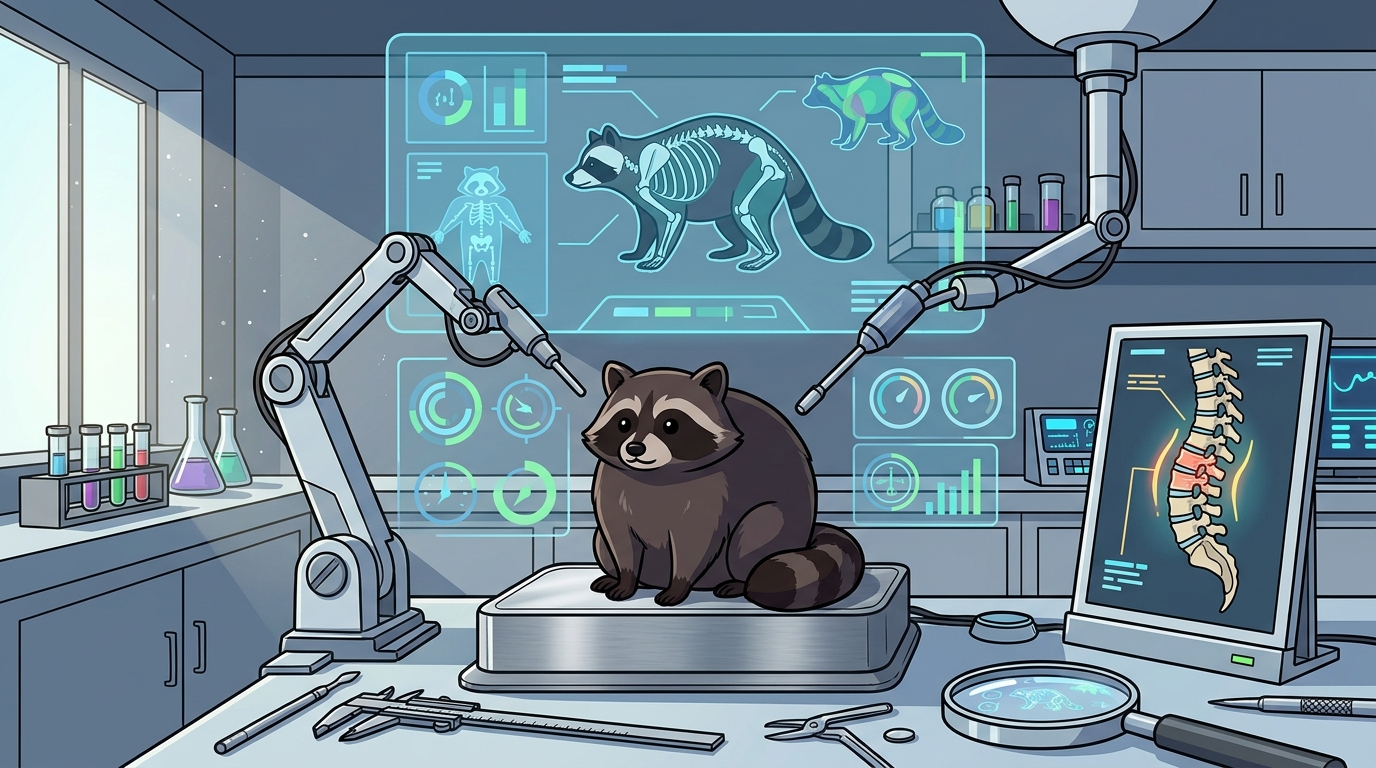
Reports consistently describe Jimothy as short and rounded, and that visible difference is central to why the videos spread. It is reasonable to describe what a source reports or what a photograph visibly shows. It is not responsible to diagnose a wild animal from a distance or repeat a diagnosis as a settled fact without a qualified, attributable source.
For that reason, this site uses careful language: Jimothy has a distinctive appearance; reports have discussed a possible spinal difference; the precise cause and health implications are not confirmed here.
What we can learn from general raccoon biology
Common raccoons are adaptable, omnivorous mammals with highly dexterous front paws. Their body size and weight vary with age, sex, season, food availability, and location. Zoo and educational animal guides are good places to learn those general facts, but they are not individual medical records for Jimothy.
The distinction matters because curiosity should not turn into a reason to chase, feed, photograph at close range, or seek out an animal. Wildlife observation is better when the animal's behavior stays its own.
The practical takeaway
If a wild raccoon appears injured, trapped, or unable to move normally, contact local wildlife professionals. If it is moving freely and behaving normally, distance is usually the appropriate assistance. This page is an explainer, not veterinary advice.
Reading list